
Exploring Decay: Nature’s Unexpected Transformations – in Andy Goldsworthy’s Art


I am trying to get to Scotland to see an exhibition and they cancel my train because of Storm Floris.
I read – as a result of the winds trees are felled on the Waverley Park. This felt like letting go of the past as I had seen that tree stood there for 30 years and now in front of everyone it will be lying in pieces.
I checked my phone for updates as I waited for my options to travel to improve. Honestly? I booked three ways to get to Scotland because since the pandemic all roads are better than one. On my phone was a weird email from a man who wanted me to do some writing work for free and he got angry with my proposed time line. So I dug deeper to my boundaries and I resent an earlier email I had sent him for clarity. He was annoyed but this was his storm so nothing had really changed.


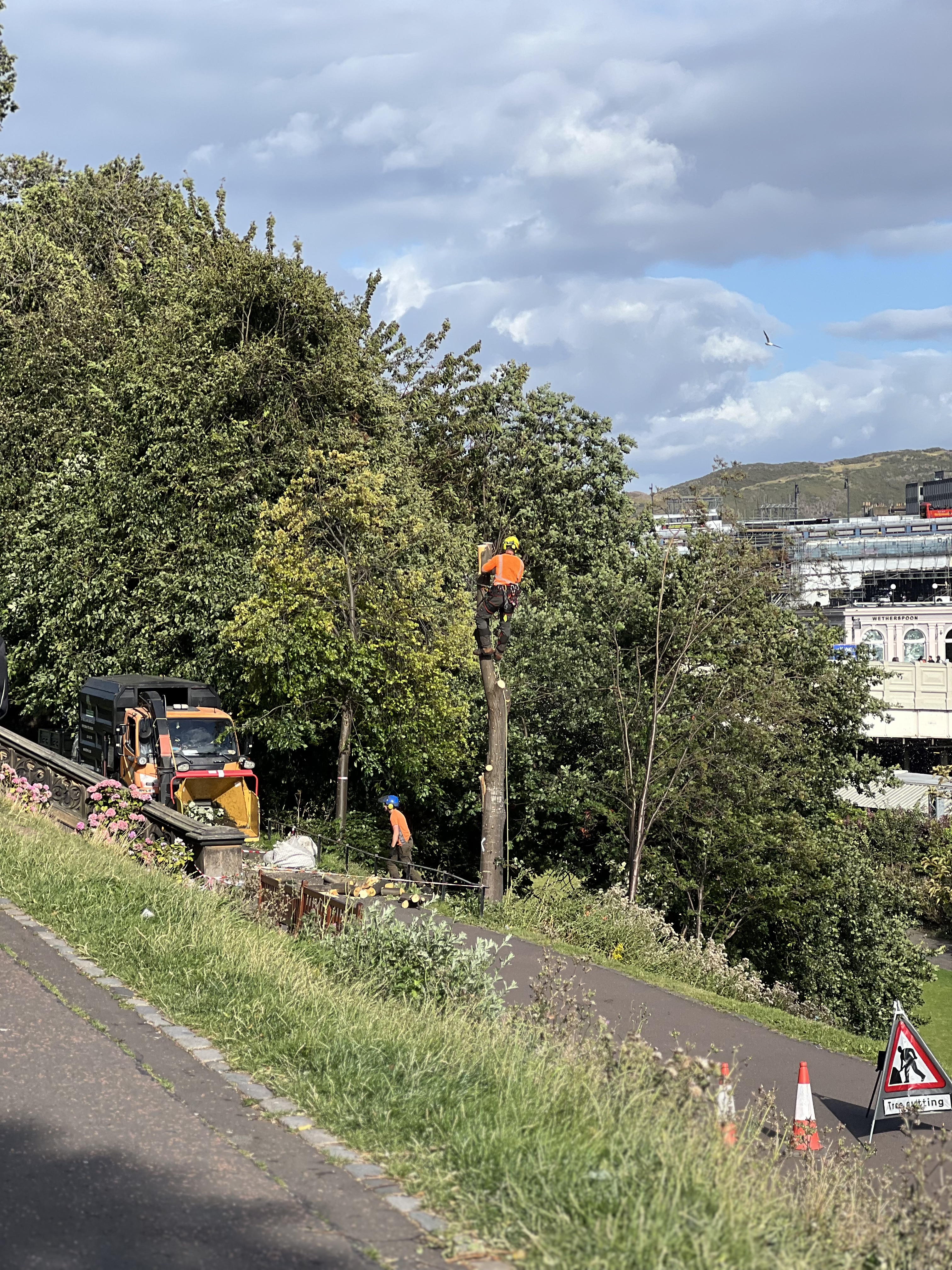

When I got to Scotland I looked at the fallen tree, now standing like a twig and lying with pieces of wood all around. I thought about how maybe that’s enough. Just being in our own space and standing up? I mean that’s a sign of having got somewhere and being where we need to go. Now the tree wasn’t moving in the wind so I think that it probably had clear boundaries of its own. The fallen tree was stood right next to my main reason for booking three modes of transportation to Edinburgh. A truly great exhibition I had heard of was in town. one about land art and how resilience is a tool. So let’s walk together inside and find out more about Andrew Goldsworthy.

Even the name inspired me. Goldsworthy, worthy of gold? As I recall he has three children, went to Preston Polytechnic to do art in the 1970s (his notebooks are below) and now lives in Dunfermline (also featured in his art below).


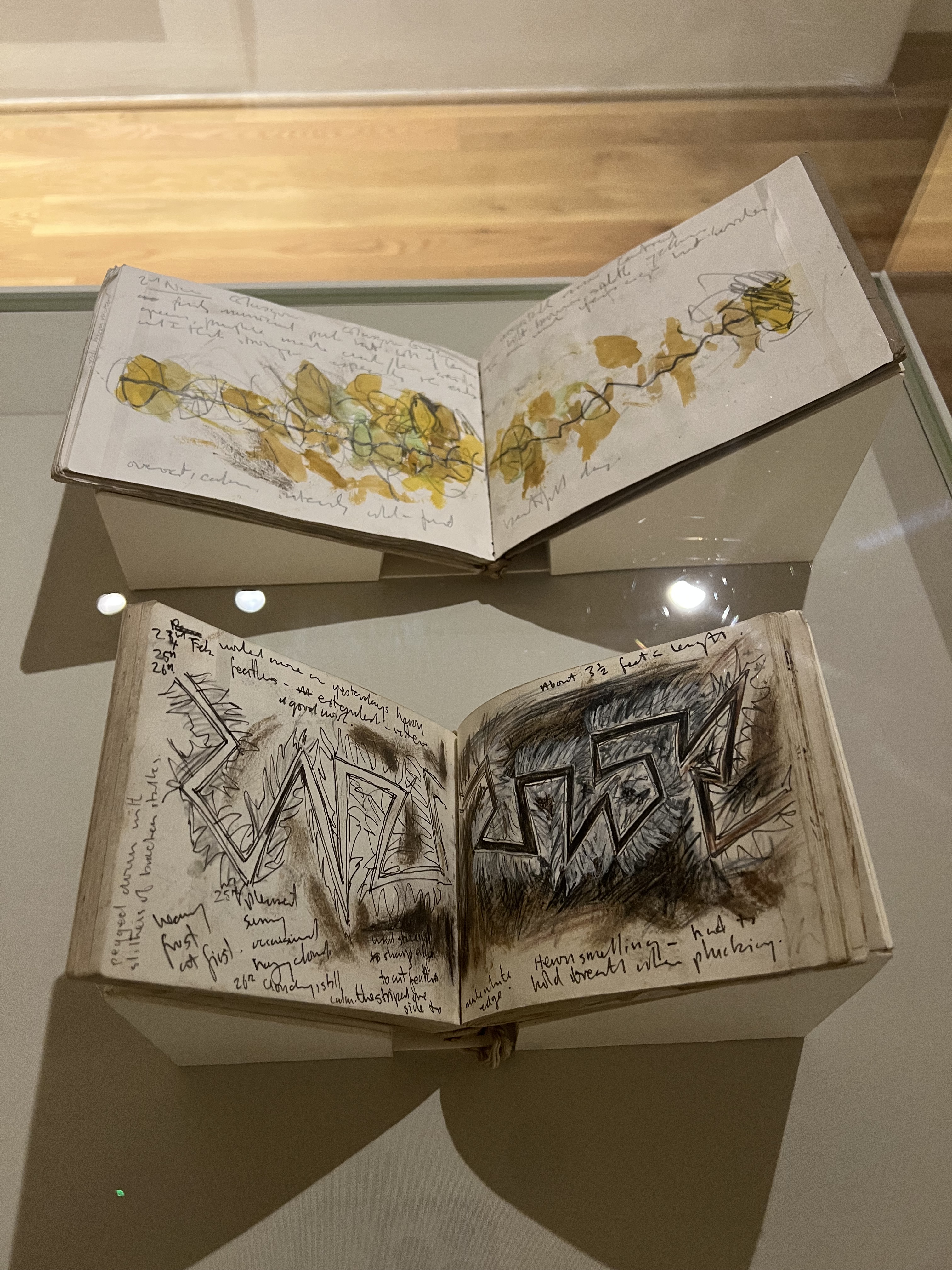
Something about his understated style clings – even the entrance to his 50 year retrospective encouraged me to push back. We can’t be all things to all people and I remember a popstar saying he had conquered America in the 80s because he didn’t change his act. And yes, not everything can be a marketing move even though whilst writing this blog, I know there are certain SEO words that will draw more eyes to this page, temporarily at least. I hope you will keep reading anyhow.
And if you don’t then as in life, maybe it’s not the match we were both hoping for. In life? If you don’t fit in then maybe you don’t get the gig or chance to perform. I think fairy stories told me certainly not my friends. As I lived in a village full of strong individuals in Wales. No one deflected their identity to please others. You either got the job or you didn’t. So here I am a long way from a small village now trying to get student discount for an incredibly important exhibition in Edinburgh. And about that fitting in logic… I’m not the typical age for a student and sometimes people do not accept my identity card at face value so I either give in or I protest. Here I delivered some drama to the situation and explained I would publicly log into my University account to show them my identity.. and suddenly it was ok. People don’t like drama so much when they are the centre of it. We are both definitely older than when we started descending on this blog and I am starting out again in a new field and making some progress but my story is new again. This blog has been about my and your story – hoping at times we resonate or share parallel paths or at least wave from different sides of the street. The old days of wordpress certainly felt like a village and thankfully I am connected with bloggers here who make this space feel like home and you know who you are.

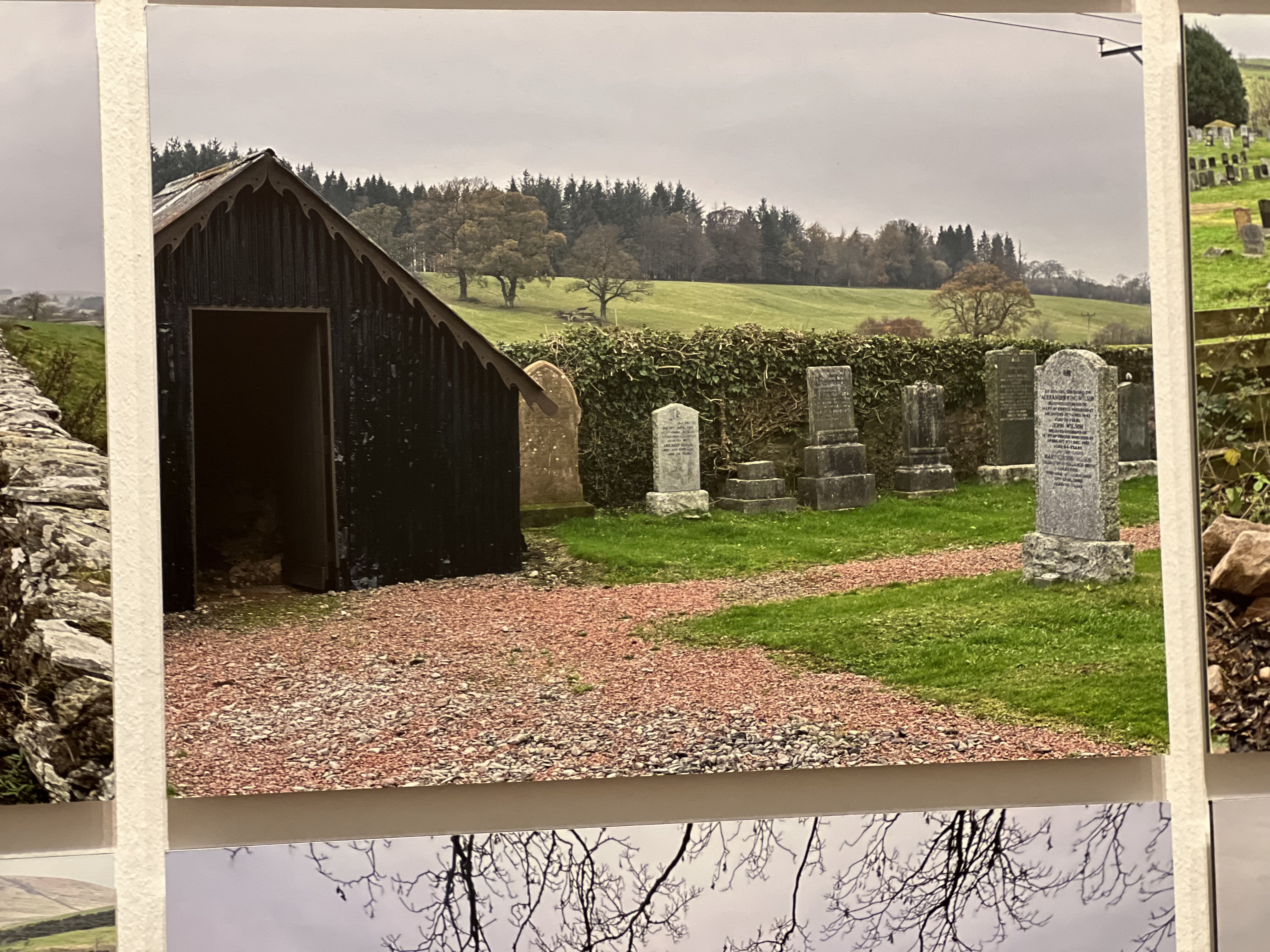
The exhibition honours the old stones and land that echo the blissful quiet community life inside a rich community. I am left with the feeling it was one hundred percent worth the air travel through Storm Floris and the skilful landing at edinburgh airport. But that said not everyone will like everything about my take on the art and although the decay section of a fallen tree getting older was the most popular part of the art show, personally inside the gallery I was still watching the slow videos Andy walking through ice capped muddy fields as his toes filled with water in the lower gallery.

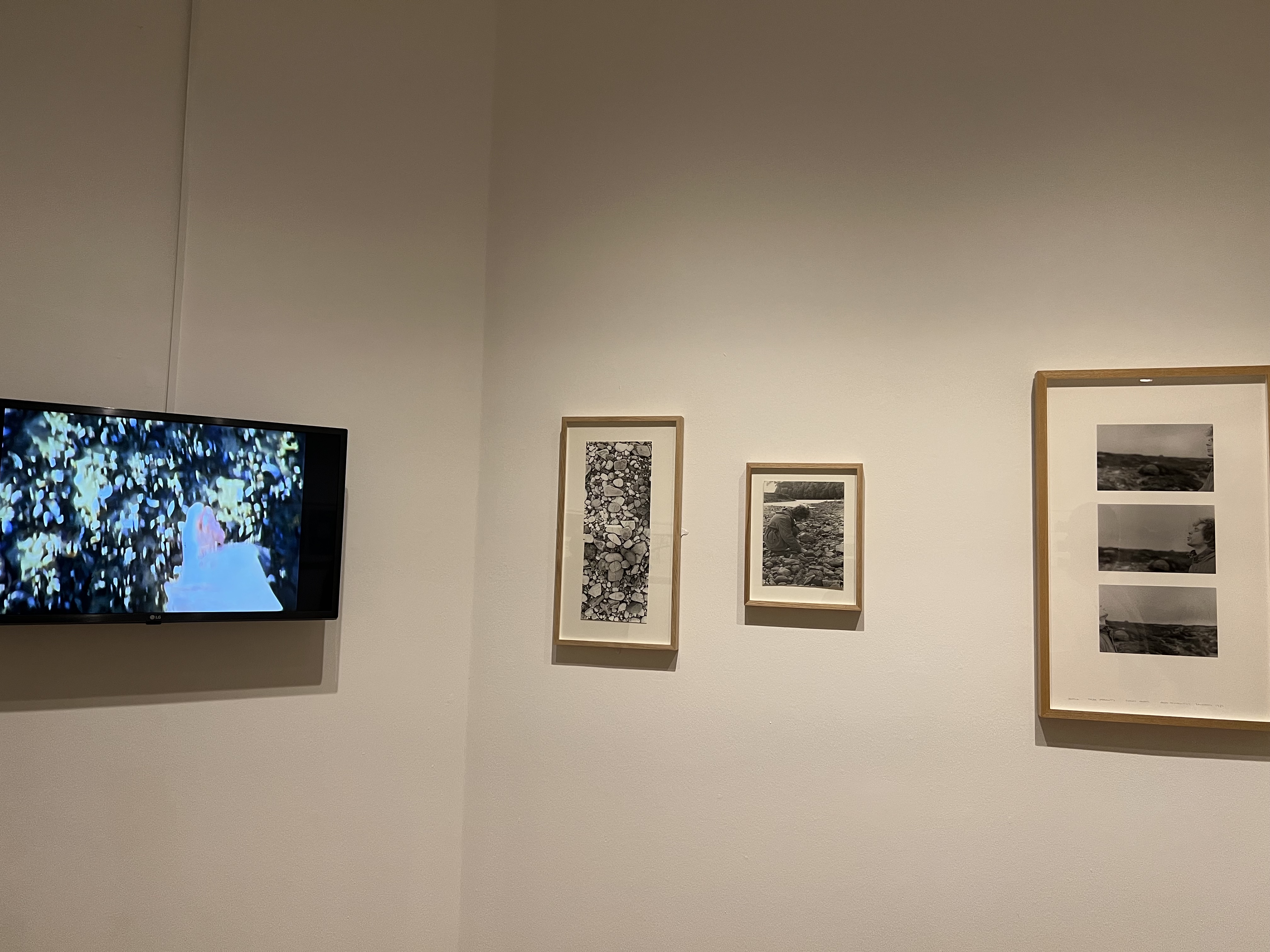
There was plenty of space to sit there and the people who watched the 15 minuted movie on loop with me stay in my memory. However, making space for my people pleasing vibe,,, here are my thoughts on the buzz and colour though of the decay section of the show it possibly has the biggest story to tell. Let’s follow the art trail through the gallery…


The Purpose of Decay: Diversity, Disease, and the Unexpected Bloom
We often think of decay as an ending. A fading. The final act before something disappears. But from a biological and ecological perspective, decay is not just the aftermath — it’s the beginning of something richly transformative. Where we see rot, nature sees opportunity. Where we sense absence, ecosystems burst into presence.
A single fallen leaf offers a case study. Once brilliant green, it yellows, reds, bronzes — each hue the result of enzymes breaking down chlorophyll and revealing hidden pigments: anthocyanins, carotenoids. The leaf begins to curl, its tissues softening, welcoming colonies of decomposers: fungi, bacteria, tiny insects. A microcosm of life feeds on what was once photosynthetic flesh.
And what lives on that decay? Springtails, earthworms, beetle larvae. These become food for robins, foxes, owls. The leaf is no longer a leaf, but a portal of transfer — matter into matter, life into life.
Zoom out. A wasteland. A scrubby patch left behind after a building falls or a lot is abandoned. Nature doesn’t wait. Foxes arrive first — scavengers of the city, creatures of edge habitats. Then come the plants: mosses, birch, willowherbs. The air changes. Litter is slowly replaced by lichen. The land begins to speak again. Decay isn’t silence — it’s succession.
Decay as Design
Even in places we associate with finality, like gravestones, decay makes its art. Lichens — symbiotic pairs of fungi and algae — speckle grey slabs with yellows, oranges, and eerie blues. Each lichen tells of air quality, moisture, shade. Even death becomes decorated.
Some fruits mimic decay as a survival strategy. Take the necrotic mimicry found in certain figs or passionflowers — where their bruised, blotched skin attracts insects precisely because it appears already gone. Decay isn’t just real — it’s performed.
In this way, nature reclaims aesthetics from human ideas of perfection. It shows us how beauty lies in change — not in permanence.
Disease: Not Just Destruction
Decay and disease are often linked — but not always synonymous. A fungal infection, like athlete’s foot, causes inflammation, flaking, discomfort. Yet zoom in, and you see a war of enzymes, host responses, microbiome rebalancing. What looks like a nuisance is also a living system, struggling for equilibrium.
In plants, parasitic infections like mistletoe cling to trees, extracting water and nutrients. Unlike decomposers, parasites often reduce diversity rather than increase it. They dominate. They take, but don’t return. An overabundance of parasite, unchecked, can halt the dance of succession.
Still, even parasitism has shaped cultural ideas — mistletoe becoming a symbol of love, irony blooming from parasitic roots.
From Decay to Design: Goldsworthy’s Legacy
The artist Andy Goldsworthy understood the potential of decay as creation. In his work, particularly in Sheepfolds and Rain Shadows, the natural breakdown of materials isn’t something to avoid — it’s the very tool of expression. His leaf patterns disintegrate, his ice spirals melt. But that’s the point: impermanence is the art.
Decay becomes memory, motion, and meaning.
Styling Decay: A Top Tip from Nature
Today’s stylists are picking up where nature left off. One top tip from fashion colourists this autumn: choose a nail colour to match a tone of decay — the ochre of rust, the violet of mould, the pale green of lichen on slate. You might find your next palette not in the shops, but on a gravestone, or in the bruised blush of windfallen fruit.
In this high street of impermanence, maybe we’re all just catching up with the foxes.
⸻
Final Thought
Decay is not death. It is redistribution, diversity, and sometimes design. From enzymes to urban wildlife, from fungal feet to funeral stones, it reminds us that endings are just beginnings for those who know how to look.
If you want to understand a place — really understand it — don’t just look at what’s growing. Look at what’s breaking down.


 lita doolan media
Love your final thoughts! Wise words.
LikeLiked by 1 person