
Gower Street London: University Never Stood Still
Universities have become very conscious of the student experience. But architecture also reveals an idea. The old message could sometimes feel like: here is the institution; find your place within it. The newer buildings increasingly say: come in, sit down, stay for a while.
That matters particularly in London, because its universities were never populated only by people whose lives could conveniently be put on hold while they studied.

Coffee booths, evening students and the quiet persistence of learning in Bloomsbury
There are streets you pass through and streets that seem to be doing something to you as you walk along them. Gower Street is one of the latter. It has the grand Bloomsbury credentials — university buildings, Georgian remnants, libraries and institutions with serious names — but after travelling in and out of this part of London while studying statistics at Birkbeck, I have come to think of it less as an academic monument than as a working street. People arrive carrying laptops, sandwiches, unfinished assignments and the remains of another working day. They disappear through one university door and emerge from another several hours later. Knowledge here has always seemed to be on the move.
Over time, Bloomsbury became something stranger and more interesting than a single university quarter. Birkbeck, SOAS, the London School of Hygiene & Tropical Medicine and other parts of the University of London grew up within walking distance of one another. Walk towards Bloomsbury from the tube and the history is still readable in the buildings: different ideas about who university is for, stacked remarkably close together.
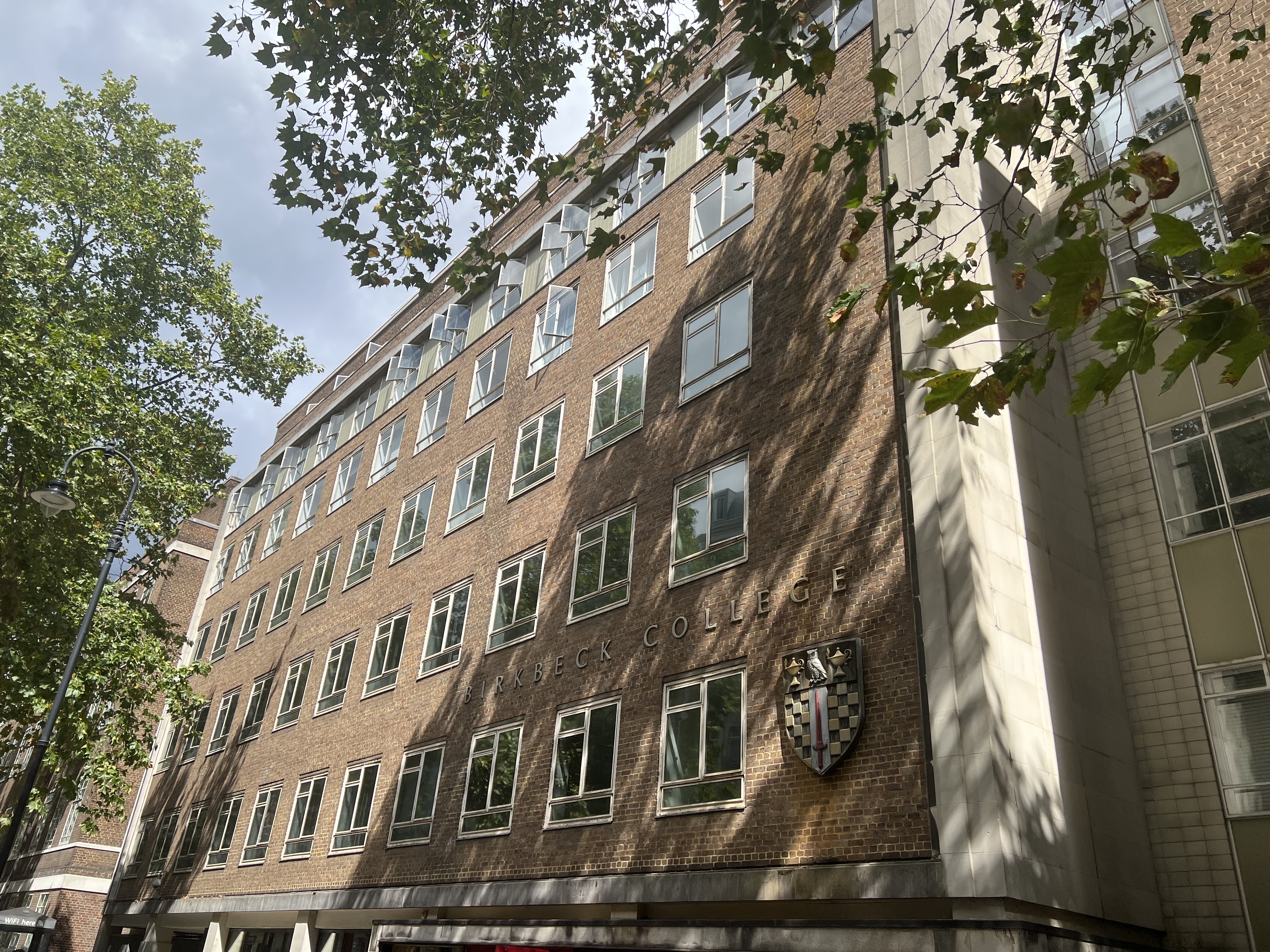
Going in and out of Birkbeck to study statistics, I have seen universities refurbish, open themselves up and become noticeably friendlier places to occupy. There are coffee shops inside now, booths to work in, sockets where you actually need them, informal corners for conversations and spaces where a student can sit between a lecture and the rest of life. Some of this is branding, a habit as old as the hills. University College London established itself here as the radical alternative to the ancient English universities, admitting students without the religious tests then required by Oxford and Cambridge.
Tenacity mattered. Students came after jobs, changed direction, acquired practical skills and kept turning up. There is a line from those students to the extraordinary range of higher education we now almost take for granted. Birkbeck’s great tradition is evening education. The Polytechnic tradition similarly valued useful and technical knowledge and attracted people whose route into higher education was not necessarily a straight procession of immaculate school grades.
Experience mattered. The technical element is important. We sometimes tell the history of universities as though serious education gradually descended from philosophy towards something more vocational. London suggests almost the reverse. The demand for mathematics, and professional education helped make the modern university broader. Technical knowledge did not narrow education. In many ways it opened the doors.
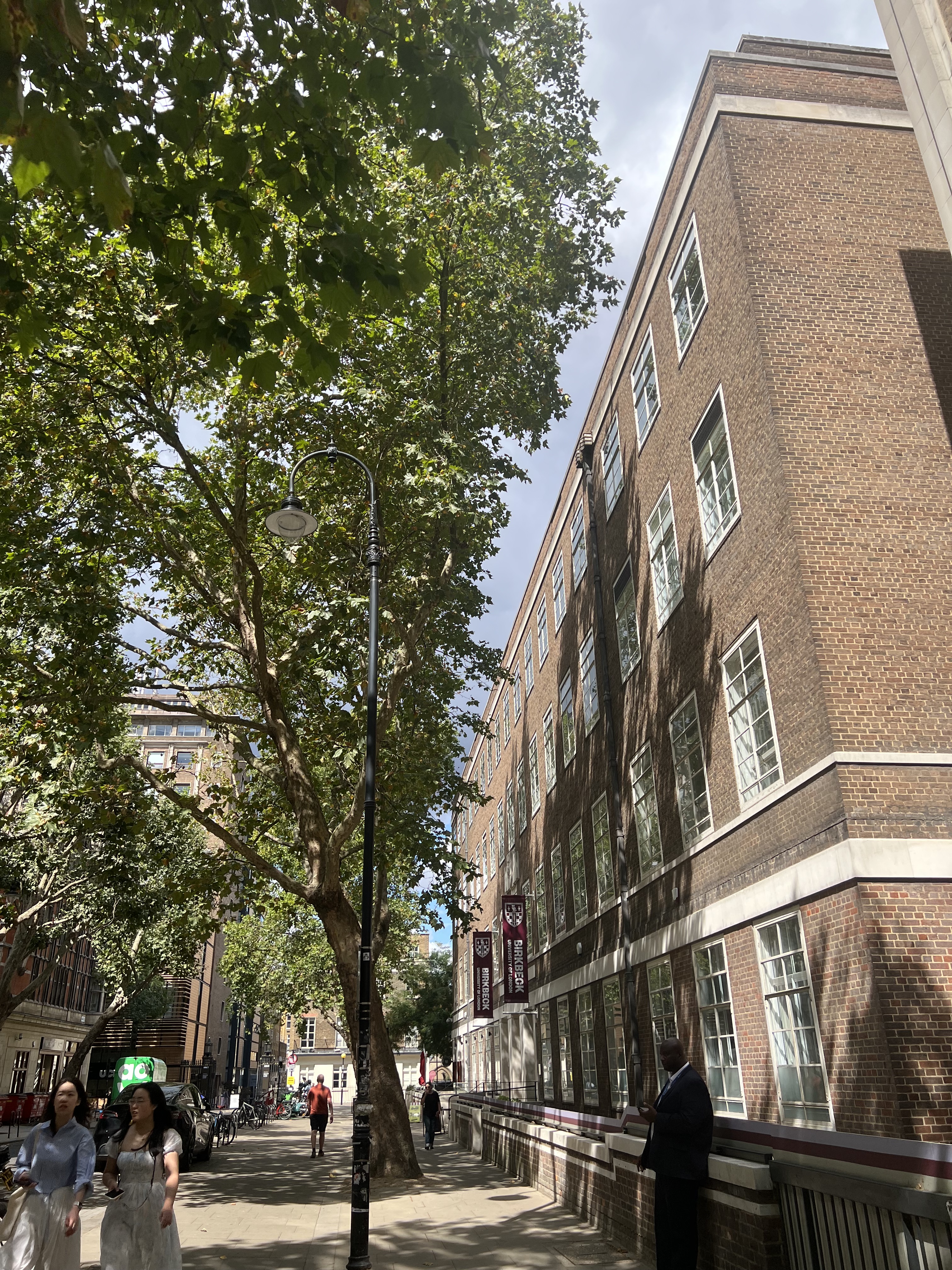
Work mattered. A student learning something because they intend to use it can be every bit as intellectually curious as someone studying it for its own sake — and frequently brings questions that the discipline would not otherwise have thought to ask.
Yet some of my favourite parts of this academic landscape are the bits that haven’t been upgraded at all. The little green spaces and squares around Bloomsbury still contain benches on which somebody sits alone with a book, a coffee or simply ten minutes to spare. They are tiny placeholders between one activity and another. Before the booth, perhaps, there was the bench. Before the charging point and university café there was somewhere outside to sit and collect your thoughts before going back in. The technology changes; the discipline of withdrawing for a few minutes and thinking does not.
It makes the old accusation of the university as an ivory tower feel slightly peculiar in Bloomsbury. Perhaps parts of academia have always managed to retreat into one. But was Gower Street ever entirely that? Its history is too full of commuters, students, evening classes, laboratories, arguments and people arriving from work. Even the imposing facades have always had doors.
What has changed is perhaps our willingness to make those doors easier to enter. There is the extraordinary intellectual overcrowding of the place. SOAS brings cultures from across the world into the neighbourhood; the London School of Hygiene & Tropical Medicine puts global health almost physically alongside the humanities; UCL stretches science and the arts across the same few streets. Different traditions do not just coexist in a prospectus. Their students queue in the same cafés and cross the same roads.
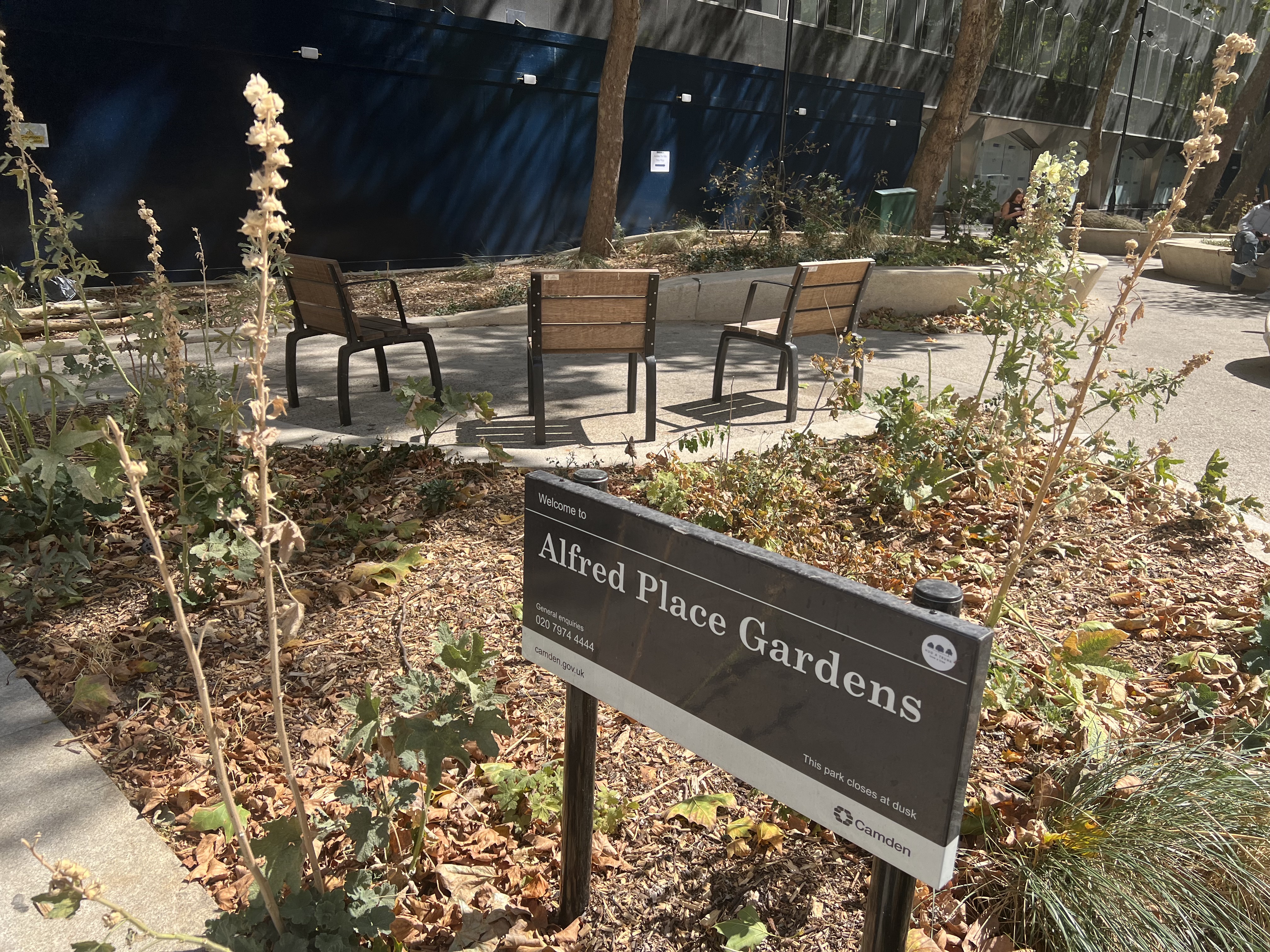
I sometimes think about that when I come out of a statistics class and walk back through Bloomsbury. Behind me are students of languages and subjects I probably haven’t heard of yet. Someone is working in a booth. Another is eating lunch at an improbable hour. Outside, somebody has found one of those old benches and is doing what students here must have done for generations: stopping for a moment before carrying on.
Gower Street has become more polished and certainly better supplied with coffee. But underneath it is something much older and rather tougher — the insistence that learning should leave room for people whose lives are already in progress.
Perhaps that is Bloomsbury’s inheritance. Not a collection of universities, but different versions of the university sitting side by side: practical and theoretical, local and international, old and continually remade.
And still, every morning and evening, people turn up.


I would go back to Bloomsbury in a heartbeat. Thank you for this post!
LikeLike